- Bill Gatton Chevy Show
- Carter Stanley Interview - 1966
- How Far To Little Rock? - Search live shows
- Jim Kent's film 'Ralph Stanley's Bluegrass Festival'
- New WCYB Recording
- Pound Va. 1972 - Video
- Replica Rebel T-Shirt
- R.I.P. Ralph
- Roy Lee Centers Last Show
- Song & Memory Books
- Stanley Brothers - WCYB Acetate
- Stanley Standard - Carter Stanley Memorial Issue
- Suwannee River Jamboree
- Up In The Cloud - 1957-62



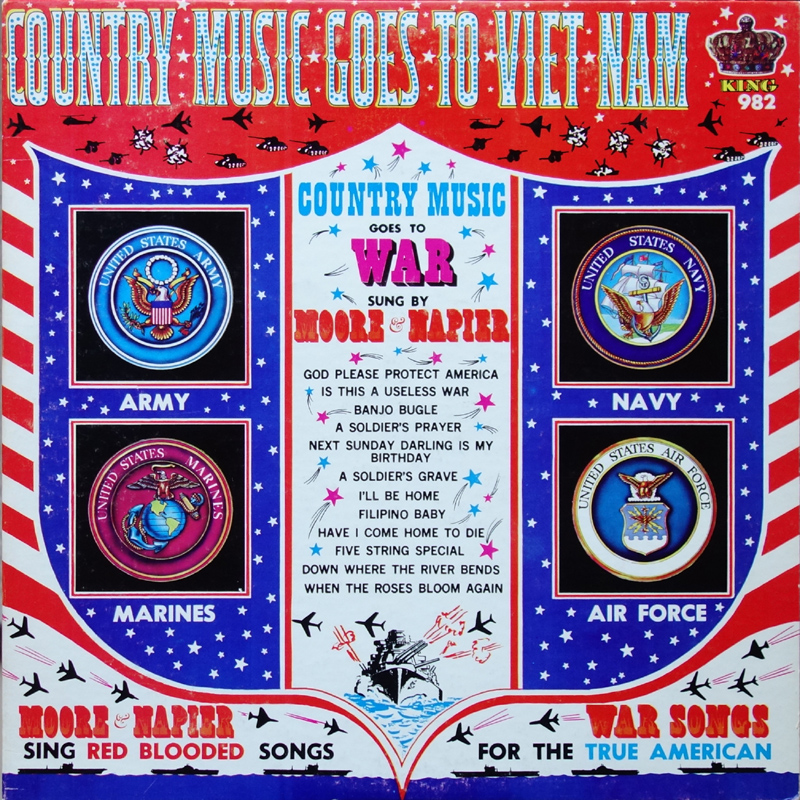
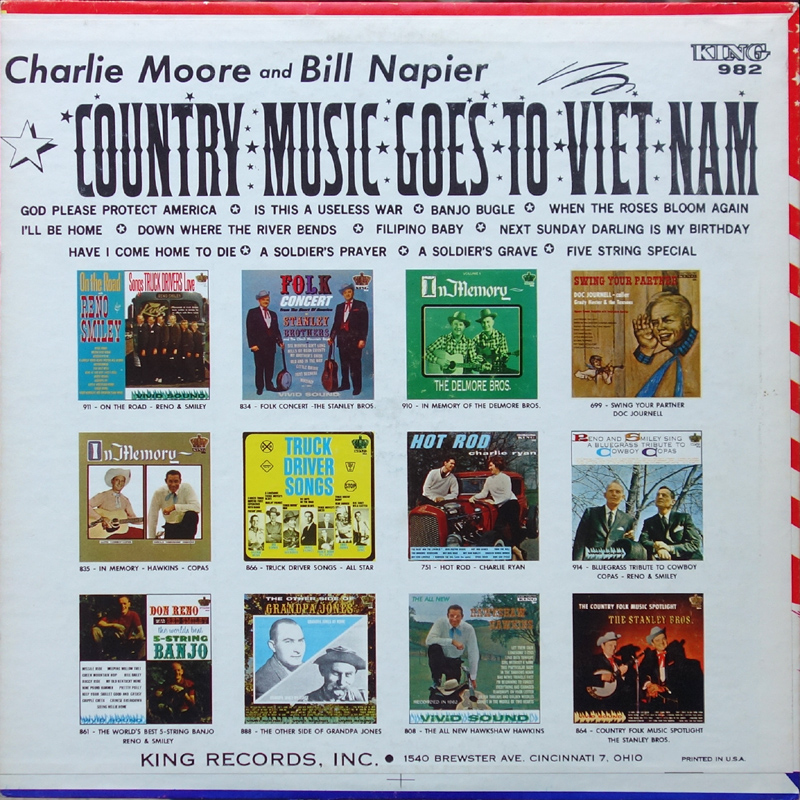
Charlie Moore & Bill Napier - Country Music Goes To Vietnam
(King KS-982) 1966
Average Album Rating: 3
(Total votes 1)
- 5 star
- 4 star
- 3 star
- 2 star
- 1 star
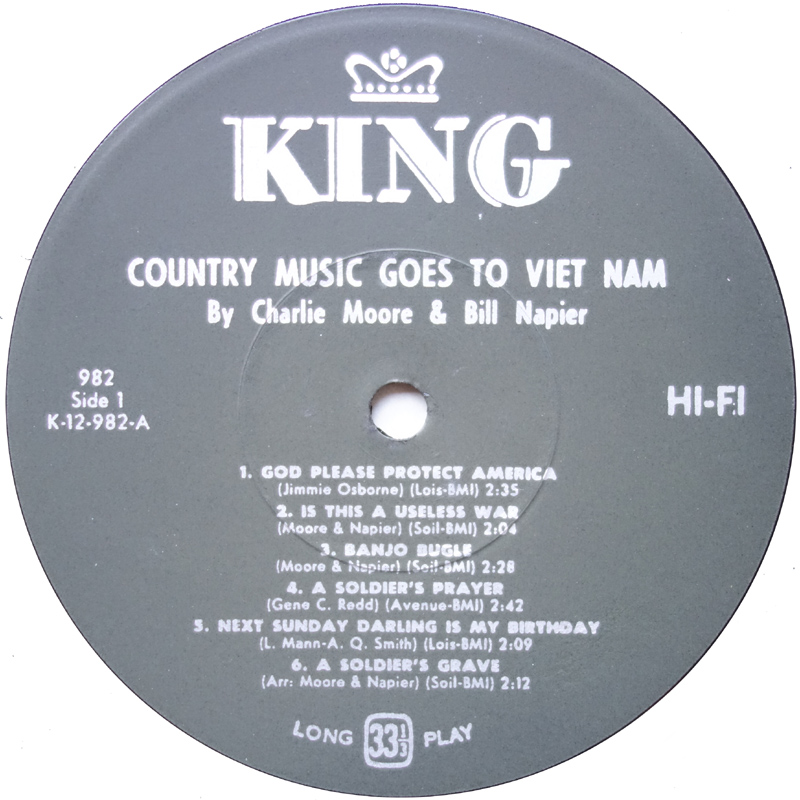
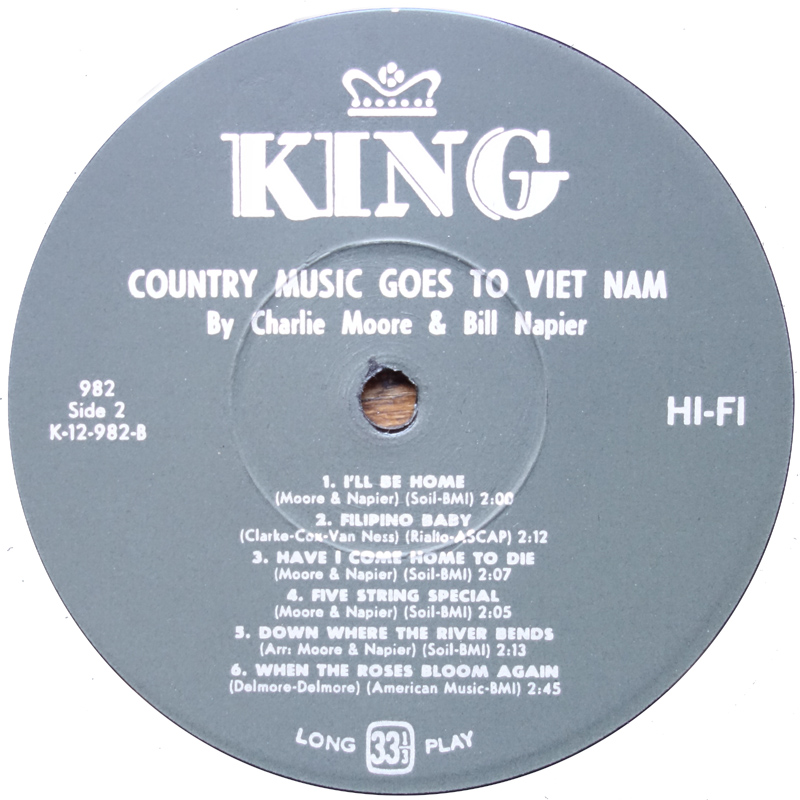
Eleven tracks on this album are said to have been recorded at King Studios on 3 Apr 1966[1] with the final song, When The Roses Bloom Again, recycled from their 1963 debut Folk 'n Hill LP.
Bill Napier plays banjo on four tracks, and lead guitar on the rest.
Another loose 'concept' album, this one features luke-warm re-workings of old war songs plus five originals, two of which are instrumentals.
At least three of the songs had been previously been recorded by other artists for King:- God Please Protect America had been cut by Jimmie Osborne for the label in response to the war in Korea in 1950; Filipino Baby was recorded by Cowboy Copas for King in 1944; and Next Sunday, Darling Is My Birthday was first recorded by Clyde Moody for King in 1947.
Bill Napier had also previously helped The Stanley Brothers record Next Sunday, Darling Is My Birthday in 1959 playing lead guitar on the session for Sing Everybody's Country Favorites LP.
The Moore & Napier version is a bit more up-tempo than the Stanleys, and features a solo vocal by Charlie. The lyrics on the chorus and a couple of lines in the second verse have also been re-written to make the song fit with the album's "war" theme. i.e. the chorus has changed from:
"While friends are singing happy birthday
There'll be a smile upon my face
But when they're gone, the smile will vanish
A broken heart will take its place"
to:
"No friends to wish me happy birthday
My hopes and dreams now are gone
A soldier in a foreign country
10,000 miles away from home"
Soldier's Grave, which the Stanley's had cut in Sept 1965, was written by Jim Anglin of Johnny & Jack but sold to Roy Acuff. The Bailes Brothers recorded it in 1946 and Hank Williams also performed the song. Moore & Napier's version is pretty decent, with a solo vocal from Charlie rather than the Stanley's vocal harmony.
Down Where The River Bends was first performed by Johnny & Jack in the mid-40s but wasn't recorded by them. The Country Gents were I think the first bluegrass act to record it in February 1965, having learnt it from radio performances by Red Allen & the Osborne Brothers.[2] Ralph, of course, also recorded the song with Charlie Sizemore on lead vocal on his 1978 LP Down Where The River Bends.
A Soldier's Prayer is a slow-waltz / part recitation which was written by Gene C. Redd who worked at King. He also wrote co-wrote I Don't Want Your Rambling Letters and played drums on the Stanley's recording of Daybreak In Dixie[4]
(I'll Be With You) When The Roses Bloom Again had been cut by Mac Wiseman in 1954 on a Dot 45. The song originates from the 1901 Spanish-American war, but I reckon the Mac Wiseman 45 was the inspiration for Moore & Napier's cut, as both the Dot 45 and the Moore & Napier LP labels credit the song to the Delmore Brothers.[3] The version here is the same as on the Folk 'n Hill LP
Of the original material: Banjo Bugle and Five String Special are decent bluegrass instrumentals, with Banjo Bugle making good use of plucked banjo harmonics and Five String Special having some pleasant banjo/fiddle work. The three original songs are definitely 'period-pieces': the patriotic Is This A Useless War sounds a bit dated; I'll Be Home is about a letter from a dead soldier with a fine vocal from Charlie and some nice 'Reno'-like banjo; and the ¾ time Have I Come Home To Die tells the tale of a soldier who upon returning home is shot by his sweetheart's new lover.
One 45 was released from the album: Is This A Useless War / Soldier's Prayer (King 45-6036) 1966; while another later 1967 release coupled Banjo Bugle with Girl Of The Night from the 1958: Brand New Vocal Country And Western Songs LP (King 45-6076) 1967.
- Charlie Moore: guitar, lead vocals
- Bill Napier: banjo, lead guitar, baritone vocal
- Benny Birchfield: bass
- Jim McCall: mandolin, tenor vocals
- Johnny Dacus: fiddle
| Track: |
Title: |
Time: |
Date: |
Original Release: |
|||||||||||||||||
|---|---|---|---|---|---|---|---|---|---|---|---|---|---|---|---|---|---|---|---|---|---|
| A-1 |
God Please Protect America |
02:35 |
3 Apr 1966 |
Country Music Goes To Vietnam |
|||||||||||||||||
| Jimmie Osborne |
|||||||||||||||||||||
| A-2 |
Is This A Useless War |
02:04 |
3 Apr 1966 |
Country Music Goes To Vietnam |
|||||||||||||||||
| Charlie Moore / Bill Napier |
|||||||||||||||||||||
| A-3 |
Banjo Bugle |
02:28 |
3 Apr 1966 |
Country Music Goes To Vietnam |
|||||||||||||||||
| Charlie Moore / Bill Napier |
|||||||||||||||||||||
| A-4 |
Soldier's Prayer |
02:28 |
3 Apr 1966 |
Country Music Goes To Vietnam |
|||||||||||||||||
| Gene C. Redd |
|||||||||||||||||||||
| A-5 |
Next Sunday Darling Is My Birthday |
02:09 |
3 Apr 1966 |
Country Music Goes To Vietnam |
|||||||||||||||||
| Syd Nathan / Arthur Q. Smith |
|||||||||||||||||||||
| A-6 |
A Soldier's Grave |
02:12 |
3 Apr 1966 |
Country Music Goes To Vietnam |
|||||||||||||||||
| Jim Anglin / Jack Anglin / Johnnie Wright |
|||||||||||||||||||||
| B-1 |
I'll Be Home |
02:00 |
3 Apr 1966 |
Country Music Goes To Vietnam |
|||||||||||||||||
| Charlie Moore / Bill Napier |
|||||||||||||||||||||
| B-2 |
Filipino Baby |
02:12 |
3 Apr 1966 |
Country Music Goes To Vietnam |
|||||||||||||||||
| Clarke / Cox / Van Ness |
|||||||||||||||||||||
| B-3 |
Have I Come Home To Die |
02:07 |
3 Apr 1966 |
Country Music Goes To Vietnam |
|||||||||||||||||
| Charlie Moore / Bill Napier |
|||||||||||||||||||||
| B-4 |
Five String Special |
02:05 |
3 Apr 1966 |
Country Music Goes To Vietnam |
|||||||||||||||||
| Charlie Moore / Bill Napier |
|||||||||||||||||||||
| B-5 |
Down Where The River Bends |
02:05 |
3 Apr 1966 |
Country Music Goes To Vietnam |
|||||||||||||||||
| Jack Anglin / George Peek / Johnnie Wright |
|||||||||||||||||||||
| B-6 |
(I'll Be With You) When The Roses Bloom Again |
02:45 |
Jan 1963 |
Folk 'n Hill |
|||||||||||||||||
| Alton Delmore / Rabon Delmore |
|||||||||||||||||||||
Other artwork / related images:
[1] Personnel and dates from 'Thirty Years Ago This Month' section of the April 1995 edition of 'Bluegrass Unlimited' (p6).
[2] Liner Notes to the Country Gentlemen - 'The Early Rebel Recordings 1962-1971' (Rebel REB-CD-4002-1/4) 1998.
[3] https://mudcat.org/thread.cfm?threadid=3494
[4] p114 of Gary Reid's book The Music Of The Stanley Brothers.

